

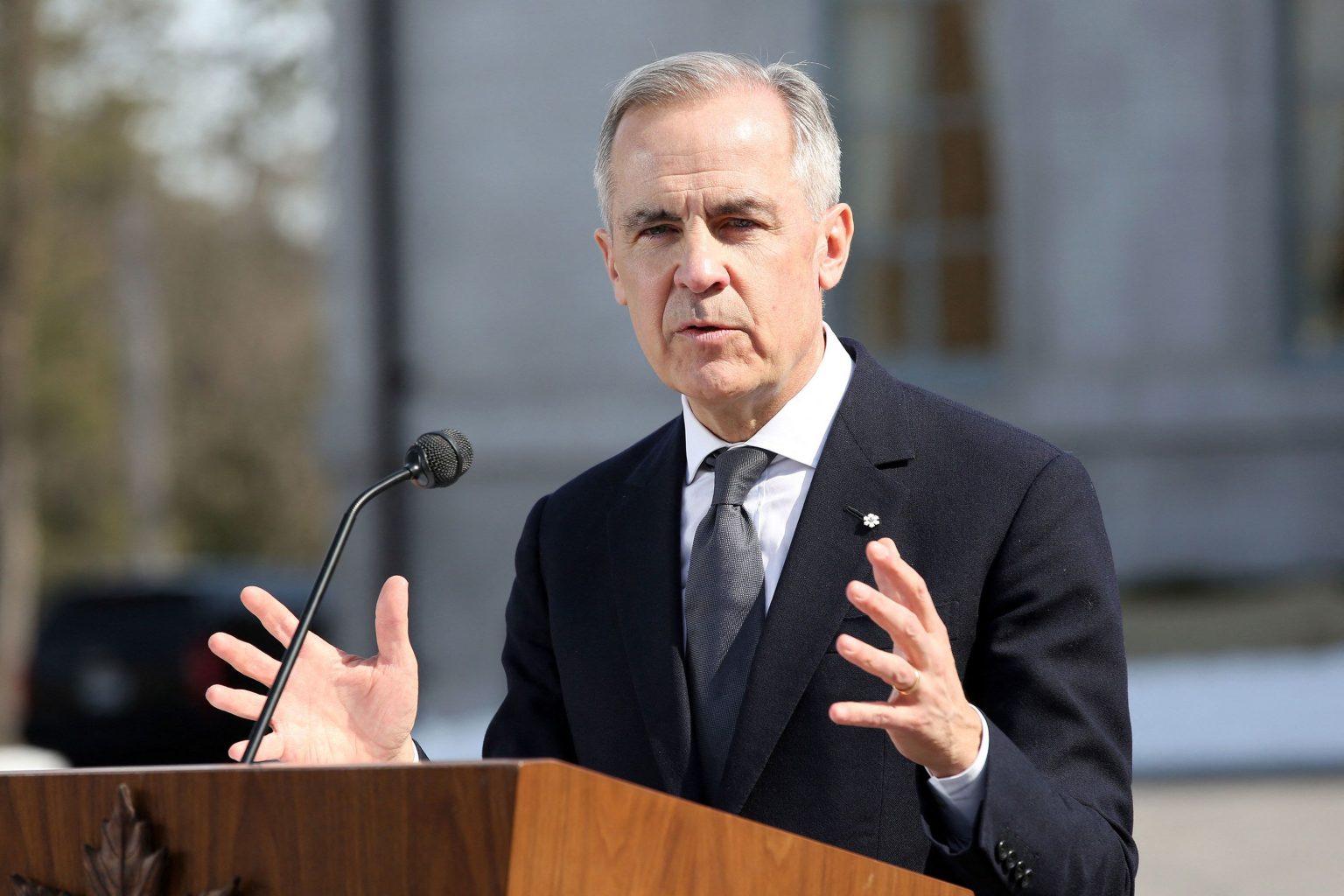

Mark Carney entered Canadian politics with a résumé unlike that of almost any modern prime minister. Before taking the country’s highest political office, he had already managed two major central banks, advised international institutions and built a reputation as an economist capable of working through periods of global instability.
Carney became Canada’s 24th prime minister in March 2025 after winning the leadership of the Liberal Party. Born in Fort Smith and raised in Edmonton, he studied economics at Harvard before earning master’s and doctoral degrees from Oxford University. Prime Minister of Canada
His international reputation was shaped by financial crises. As governor of the Bank of Canada, Carney helped guide the country through the economic turmoil that began in 2008. He later became the first non-Briton to lead the Bank of England, where he faced the consequences of Brexit and continuing political uncertainty. He also served as the United Nations Special Envoy on Climate Action and Finance.
However, running a central bank is very different from running a country. As prime minister, Carney must turn economic expertise into policies that deliver visible results for ordinary Canadians.
His government has identified affordability, housing, national security, infrastructure and economic growth as central priorities. It also wants to reduce internal trade barriers, strengthen Canadian industry and develop new relationships with international partners. These goals have become increasingly important as the global trading system faces tariffs, geopolitical rivalry and uncertainty. Government mandate
One of Carney’s greatest challenges is Canada’s relationship with the United States. The two economies are closely connected, but continuing tariff disputes have increased pressure on Ottawa to defend Canadian industries while avoiding measures that could damage long-term trade.
In July 2026, Carney rejected the idea of restricting Canadian oil supplies to gain leverage against Washington. He argued that Canada’s reputation as a dependable supplier is one of the country’s most valuable economic advantages. The decision revealed an important part of his political strategy: maintaining pressure during negotiations without destroying the trust on which future partnerships depend. Reuters
Carney has also placed security and defence much higher on Canada’s agenda. At the 2026 NATO Summit in Ankara, his government announced new defence partnerships, military procurement plans and additional support for Ukraine. Canada also committed to expanding its defence capabilities in the Arctic and strengthening cooperation with European allies. Prime Minister of Canada
Supporters see Carney as a serious and experienced leader prepared for a difficult economic period. Critics, however, continue to question whether the skills of a central banker can translate into successful everyday politics. Canadians will ultimately judge him not by his international reputation, but by changes in housing costs, employment, public services and household finances.
Mark Carney’s rise represents a major political experiment: placing an economist at the centre of government during an era defined by trade conflicts, security threats and economic transformation. Whether that experiment succeeds could influence not only Canada’s future, but also its position in a rapidly changing world.